custom t-shirts Printing & Decoration Guide: Screen Print, DTG, Embroidery & Sublimation
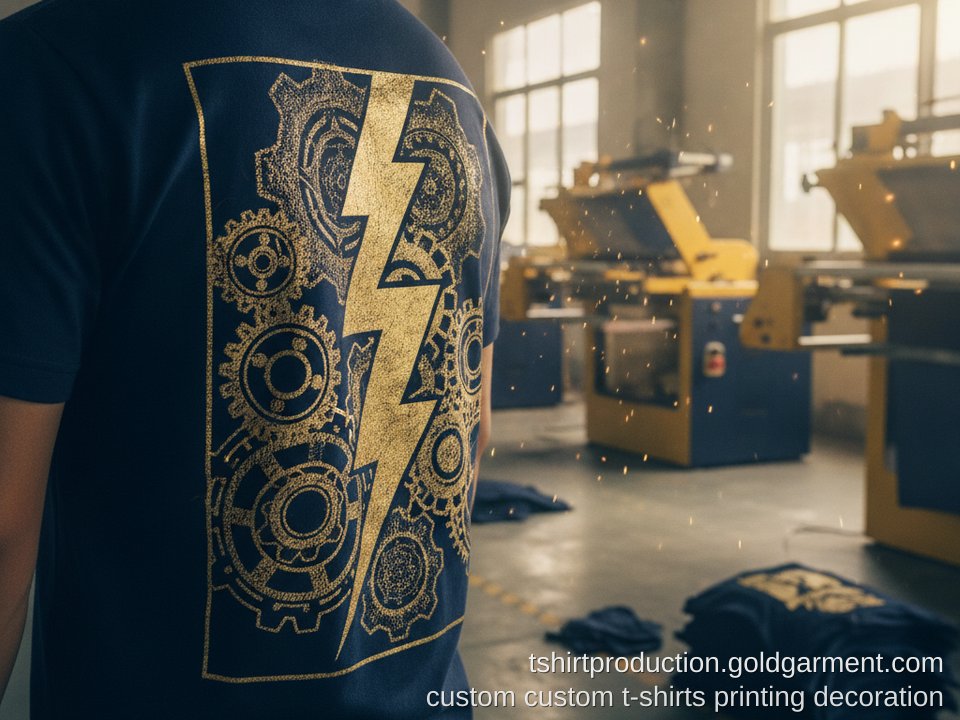
The Definitive Guide to Custom T-Shirt Printing & Decoration: Screen Print, DTG, Embroidery & Sublimation
Selecting the right decoration method for your custom t-shirts is a crucial step in bringing your brand vision to life. Each printing and decoration technique offers unique benefits, affecting the final look, feel, durability, and cost of your apparel. As a leading t-shirt manufacturer in Vietnam, Gold Garment understands that the choice of decoration significantly impacts the perceived value and longevity of your custom t-shirts. This guide will walk you through the most popular methods: screen printing, Direct-to-Garment (DTG) printing, embroidery, and sublimation, helping you make an informed decision for your bulk production needs.
Understanding the nuances of each custom t-shirts printing decoration technique is essential for sourcing managers and brand owners aiming for quality and cost-effectiveness. Whether you're launching a new apparel line, creating merchandise for an event, or outfitting a corporate team, the right decoration method ensures your design stands out. Our expertise in OEM t-shirt manufacturing Vietnam allows us to guide you through these options, ensuring your project aligns with your budget and aesthetic goals.
At T-Shirt Production Vietnam, operated by Gold Garment, we pride ourselves on offering a comprehensive suite of services for custom apparel. From initial design consultation to final worldwide shipping, our factory-direct approach ensures competitive pricing and exceptional quality. We specialize in producing high-quality custom t-shirts with a minimum order quantity (MOQ) of just 100 pieces per style, making us an ideal partner for businesses of all sizes. Learn more about the overall process in our guide to how custom t-shirts are made.
Screen Printing: The Classic Choice for Vibrant Designs
Screen printing, also known as silk screening, is a time-tested method that involves pushing ink through a stenciled screen onto the fabric. A separate screen is created for each color in your design, making it ideal for designs with a limited number of solid colors. This technique is renowned for its durability and vibrant color output, especially on darker fabrics.
How Screen Printing Works
The process begins with creating a stencil on a mesh screen, where areas not meant to be printed are blocked out. Ink is then applied to the screen and a squeegee is used to spread the ink across the mesh, transferring the design onto the t-shirt. For multi-color designs, each color is applied in a separate pass, requiring precise alignment.
When to Choose Screen Printing
Screen printing is an excellent choice for designs with bold, solid colors, simple graphics, and large print runs. It offers excellent color vibrancy and is highly durable, making it suitable for sportswear, promotional t-shirts, and merchandise that needs to withstand frequent washing. If your design has fewer than 5-6 colors, screen printing often provides the most cost-effective and visually impactful solution. For high-volume orders, it becomes even more economical due to setup efficiencies.
Pros and Cons of Screen Printing
- Pros: Highly durable, vibrant colors, cost-effective for large runs, excellent for solid colors and bold graphics, wide range of ink types (plastisol, water-based).
- Cons: Higher setup costs per color, less ideal for complex, multi-color gradients or photographic images, longer turnaround time for complex designs.
Direct-to-Garment (DTG) Printing: For Intricate and Full-Color Designs
Direct-to-Garment (DTG) printing is a modern digital printing method that allows for the application of intricate, full-color designs directly onto t-shirts. It works much like an inkjet printer, but instead of paper, it prints directly onto fabric.
How DTG Printing Works
In DTG printing, a specialized inkjet printer applies a layer of white ink (if printing on dark garments) followed by the CMYK (cyan, magenta, yellow, black) colors of your design directly onto the fabric. The ink is then cured with a heat press. This process allows for a high level of detail and a wide spectrum of colors, including gradients and photographic images.
When to Choose DTG Printing
DTG printing is perfect for designs with a high level of detail, photographic images, intricate patterns, and gradients. It's also an excellent option for smaller print runs or for creating one-off custom pieces. Because there are no screen setup costs, DTG can be more cost-effective for orders with multiple designs or for limited quantities. It produces a soft feel on the garment, as the ink integrates with the fabric fibers.
Pros and Cons of DTG Printing
- Pros: Excellent for detailed, full-color designs and gradients, no setup costs per color, soft hand feel on the garment, ideal for small runs and complex designs.
- Cons: Best suited for 100% cotton or high-cotton blends, less vibrant on dark garments without a white underbase, can be less durable than screen printing over many washes, generally more expensive for very large orders compared to screen printing.
As a leading DTG custom t-shirts OEM provider, we ensure that your intricate designs are reproduced with stunning accuracy and vibrant color fidelity. We can handle various fabric types and color palettes to meet your specific needs.
Embroidery: For a Premium, Textured Finish
Embroidery involves stitching a design onto fabric using a needle and thread. It offers a distinct, high-quality, and textured look that conveys a sense of premium craftsmanship.
How Embroidery Works
Designs are digitized into a format that embroidery machines can read. The machine then uses various stitches and thread colors to replicate the design on the t-shirt. This method is particularly effective for logos, monograms, and smaller, detailed graphics. OEM t-shirt manufacturing Vietnam.
When to Choose Embroidery
Embroidery is ideal for creating a sophisticated and durable look, often seen on corporate apparel, team uniforms, and high-end promotional items. It's excellent for smaller designs like logos or text, where a raised, tactile finish is desired. While it can handle multiple colors, it's generally best for designs that don't require fine gradients or photographic detail. The durability of embroidery makes it a long-lasting choice.
Pros and Cons of Embroidery
- Pros: Highly durable, premium and professional appearance, textured finish, excellent for logos and smaller designs, resistant to fading.
- Cons: Limited detail and color blending capabilities, can be more expensive than printing for large, complex designs, not suitable for very large graphics, can add weight and stiffness to lighter fabrics.
We are a premier embroidered t-shirt Vietnam manufacturer, capable of producing high-quality embroidered apparel for brands worldwide. Our attention to detail ensures your logos and designs are perfectly rendered.
Sublimation Printing: Vibrant & Permanent on Synthetics
Sublimation printing is a unique process that transfers a design onto fabric using heat and pressure. It's particularly effective for polyester-based fabrics and results in a permanent, vibrant, and full-color print that becomes part of the fabric itself.
How Sublimation Printing Works
Special sublimation inks are printed onto transfer paper. When heat and pressure are applied (typically with a heat press), the ink turns into a gas and permanently dyes the polyester fibers of the t-shirt. This process creates a smooth, breathable print that won't crack or peel.
When to Choose Sublimation Printing
Sublimation is the best option for printing on 100% polyester or high-polyester blend t-shirts, especially for sports jerseys, activewear, and all-over print designs. It excels at producing vibrant, edge-to-edge graphics with incredible detail and color saturation. Because the ink dyes the fibers, the print is incredibly durable and won't affect the fabric's feel. It's also excellent for photographic images and complex designs on light-colored synthetic fabrics.
Pros and Cons of Sublimation Printing
- Pros: Extremely vibrant and durable prints, no cracking or peeling, breathable and soft feel, ideal for all-over prints and photographic images, excellent for polyester fabrics.
- Cons: Only works on synthetic fabrics (primarily polyester), results in muted colors on dark fabrics (requires white fabric as a base), can be more expensive for simple designs on small runs.
Choosing the Right Decoration Method for Your Brand
The ideal custom t-shirts printing decoration method depends on several factors: your design's complexity, the fabric type of your t-shirts, your desired aesthetic, the quantity you need, and your budget. For bold, simple graphics in large quantities, screen printing often provides the best value and durability. For intricate, full-color designs and smaller batches, DTG printing is a superior choice. Embroidery offers a premium, textured finish for logos and branding, while sublimation excels on polyester fabrics for vibrant, all-over prints.
When considering bulk production, understanding the trade-offs between these methods is key. For instance, a real example from Vietnam uniform t-shirt factory Gold Garment demonstrates how different decoration techniques can be applied to achieve distinct branding goals for corporate clients. Our commitment to factory-direct pricing means you receive exceptional value, regardless of the method chosen. For a deeper dive into manufacturing options, explore our guide on custom t-shirts OEM and private label manufacturing.
Consider the fabric of your t-shirts, as this can influence your choice. Our custom t-shirts fabric guide can help you select the best materials for your project. Remember to also consider the style of t-shirt you prefer, which can be explored in our t-shirt styles guide.
Frequently Asked Questions
Q: Which printing method is the most durable?
A: Generally, screen printing and embroidery are considered the most durable methods, offering excellent longevity through repeated washing and wear. Sublimation is also highly durable as the ink becomes part of the fabric.
Q: Which method is best for small orders?
A: Direct-to-Garment (DTG) printing is often the most cost-effective and practical choice for small orders or single-piece customization due to the absence of screen setup fees.
Q: Can I get a full-color, photographic image printed on a dark t-shirt?
A: Yes, DTG printing is capable of producing full-color photographic images. For dark t-shirts, a white ink underbase is applied first to ensure the colors appear vibrant and true.
Q: What is the minimum order quantity (MOQ) for custom t-shirts at T-Shirt Production Vietnam?
A: Our MOQ is 100 pieces per style, allowing businesses of various sizes to access high-quality custom apparel manufacturing. This is a key aspect of our approach to making custom t-shirts accessible, as detailed in our guide on MOQ for custom t-shirts.
We are committed to providing you with the highest quality custom t-shirts, tailored to your specific needs and brand identity.
Partner with T-Shirt Production Vietnam for your next custom apparel project and experience the difference of factory-direct quality and service.
📩 Request a Free Quote — Response Within 5 Minutes
🌎 Website: tshirtproduction.goldgarment.com
Factory-direct pricing · MOQ from 100 pcs/style · Sample development · Worldwide shipping


Nhận xét
Đăng nhận xét